Sports Massage Aurora CO for Core, Hip, and Glute Mobility
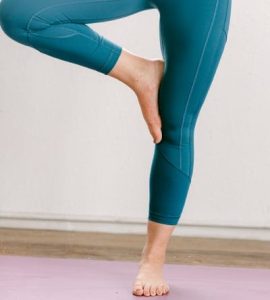


Core stability and hip mobility rarely get discussed as a pair outside training rooms and rehab clinics, but they belong together. When the trunk cannot stabilize well, the hips often try to create movement where control should exist. When the hips lose rotation or extension, the low back and knees usually pay the bill. Add stiff glutes or underactive deep hip muscles, and you get a familiar pattern: reduced stride length, pinching in the front of the hip, low back tightness after workouts, and a nagging sense that your body is working harder than it should.
That is where sports massage can be unusually useful. Not as a miracle fix, and not as a substitute for strength work, but as a practical way to improve how tissues tolerate load and how movement feels in the short term. In a place like Aurora, where runners, field athletes, lifters, cyclists, and desk-bound professionals often share the same mobility problems for different reasons, targeted manual work on the core-adjacent tissues, hips, and glutes can make a real difference.
When people search for Sports Massage Aurora CO, they are often looking for relief from pain. Relief matters, but the better question is what that pain is interrupting. Sometimes it is a runner whose left glute never seems to fire after mile four. Sometimes it is a hockey player who cannot get depth in a lateral push without groin tightness. Sometimes it is a parent who sits all day, trains three evenings a week, and cannot figure out why squats feel jammed even after a long warm-up. The common thread is not simply soreness. It is lost freedom of movement, paired with compensation.
Why the core, hips, and glutes are usually part of the same problem
The body does not organize itself by anatomy chart. It organizes around tasks. If you need to sprint, hinge, rotate, absorb force, or simply walk uphill without pain, the rib cage, pelvis, spine, and femurs need to coordinate. When one piece loses timing or range, nearby areas start improvising.
The core is often misunderstood here. Many people hear "core" and think abs, six-pack muscles, or endless planks. In practice, the core is a pressure and control system. It includes the abdominals, obliques, diaphragm, pelvic floor, spinal stabilizers, and how those structures work with breathing. If that system is disorganized, the pelvis may tip forward too much, the ribs may flare, and the hip joint can lose clean mechanics. The result is familiar in the clinic: hamstrings that always feel tight, hip flexors that never seem to loosen, glutes that test strong on one rep and disappear under fatigue.
The hips sit at the center of this. They need flexion for deep squatting, extension for running and climbing, internal rotation for gait and change of direction, and external rotation for stability and force transfer. Yet many active adults have at least one obvious limitation. Some are stiff in internal rotation and only notice it when they pivot or cut. Others lack extension and compensate by arching through the low back. Still others can stretch into positions passively but cannot control them under load. That last group is important because feeling "flexible" and moving well are not the same thing.
Then come the glutes. The glute max drives hip extension and helps with rotational control. The glute medius and minimus contribute to pelvic stability, especially during single-leg work like walking, running, stairs, and lunging. When these muscles are overloaded, inhibited, or simply asked to do the job of several other structures, they can become both weak and guarded at the same time. That sounds contradictory until you have treated enough athletes to see it. A tissue can be tense, tender, and overworked while still failing to produce good force at the right time.
What sports massage actually does in this area
A good sports massage for mobility is not random pressure on sore spots. It is selective. It looks at what movement is restricted, which tissues are driving the restriction, and whether the person needs downregulation, circulation, tissue tolerance, or help restoring a better motion pattern. The work may include broad flushing strokes, deeper myofascial work, pin-and-stretch techniques, trigger point pressure, positional release, or assisted movement. The point is not to use every tool. The point is to choose what the body will respond to.
For core, hip, and glute mobility, treatment often targets the tissues that influence pelvic position and femoral motion. That can include the gluteal group, tensor fasciae latae, deep lateral rotators, adductors, hip flexors, quadratus lumborum, lower erectors, and sometimes the lats or obliques if they are feeding into the pattern. The work may also address the upper hamstring or the side of the hip where people often feel a diffuse ache and assume the problem is only IT band tightness. In reality, the IT band itself is not the most productive place to chase sensation. The surrounding contributors usually matter more.
One of the clearest benefits of sports massage is that it can change how movement feels right away. A runner may step off the table and notice a longer hip extension on one side. A lifter may suddenly reach depth without the usual pinch. A tennis player may rotate through the trunk more evenly instead of dragging the low back into every serve. Those changes are useful, but they become durable only when paired with active reinforcement. Massage opens a window. Exercise teaches the body what to do with it.
Common movement patterns seen in active adults
A surprisingly high number of mobility complaints start with routine habits, not trauma. Long periods of sitting place the hips in flexion and often reduce the need for glute contribution. Then the same person goes from a chair to a car to a bike or to a workout that loads the same patterns. Even highly trained people can accumulate this problem if their sport is repetitive.
One common pattern is the athlete who stretches constantly but never feels looser for long. They do pigeon pose, couch stretch, band work, and foam rolling, yet their hips still feel stuck. In many cases, the issue is not a lack of stretching effort. It is that the tissues are irritable from overuse, and the nervous system is guarding motion. Manual therapy can calm that reactivity enough for exercise to become effective again.
Another pattern is the person with chronic "tight hip flexors" who actually lacks hip extension control. They feel a pull in the front of the hip, especially while running or after deadlifts, so they keep stretching the front. But when you assess them, their pelvis tips forward, their ribs lift, and their glutes do not finish extension cleanly. The front of the hip is not always the villain. Sometimes it is the messenger.
There is also the athlete with side-to-side asymmetry. A soccer player may cut better off one leg. A golfer may rotate freely one direction and feel blocked the other. A climber may high-step beautifully on one side and struggle on the other. Sports massage is useful here because it lets you work specifically on the tissues tied to the limited side, rather than treating the body as if both hips are doing the same job.
Signs that mobility work, not just more training, may be the missing piece
When people are highly motivated, they often assume the answer is more effort. More miles, more sets, more stretching, more drills. Sometimes the better move is to reduce resistance in the system first.
- You feel a pinch at the front of the hip during squats, stairs, or hill running.
- Your low back gets tight after glute-focused workouts or long walks.
- One leg feels shorter, stiffer, or less stable during lunges and step-ups.
- You repeatedly strain the same hamstring, groin, or piriformis region.
- Warm-ups help, but the restriction returns quickly once you load movement.
Those signs do not diagnose a specific condition, but they often point toward a mobility-control issue involving the pelvis and hip complex. In those cases, a targeted sports massage session can create enough change to make corrective exercise more productive.
How a skilled therapist approaches core, hip, and glute work
Experience matters here because this region responds poorly to generic pressure. The gluteal area can tolerate substantial work in some athletes, but not all soreness is helpful soreness. If a therapist drives too aggressively into guarded tissue, the body often fights back. The result is more bracing, not better motion.
A better approach usually starts with observation. How does the person stand, squat, hinge, lunge, rotate, and walk? Does the pelvis shift? Is one foot turned out? Does the rib cage stay stacked over the pelvis? Does rotation come from the thoracic spine or mostly from the lumbar spine? Those details shape treatment.
From there, the session becomes more strategic. Someone with limited internal rotation and lateral hip tightness may need focused work on the posterior hip and deep rotators, followed by active repositioning. Someone with adductor restriction may need the inner thigh addressed because adductors are often major players in hip flexion, extension, and rotational control. Someone with a jammed anterior hip may benefit from work that reduces front-side tone while improving posterior expansion through breathing and trunk positioning.
The core component is subtle but important. Direct abdominal work has its place, yet many of the best changes come from integrating breath, rib position, and pelvic control rather than pressing hard into the midsection. If the therapist understands that relationship, even glute and hip treatment can become more effective because the pelvis has a more stable base to move from.
What a session may include
The exact session depends on the sport, training history, and current symptoms, but a thoughtful appointment often includes a few familiar elements.
- Brief movement assessment before treatment, often including squat, hinge, rotation, and single-leg balance.
- Hands-on work for the glutes, deep hip rotators, adductors, hip flexors, and nearby trunk tissues as needed.
- Assisted range of motion or pin-and-stretch techniques to improve hip rotation or extension.
- Recheck of the original movement to see what actually changed.
- Simple homework, usually one or two drills, to hold the gain rather than a long corrective program.
That recheck matters. It separates useful treatment from guesswork. If a person came in because the right hip pinches in a split squat, the therapist should want to know whether the pinch eased after the intervention. Massage should connect to function, not just sensation.
Why athletes in Aurora often need a different conversation about mobility
Aurora has a broad athletic population. You have runners logging miles on pavement and trail, skiers training in the off-season, court sport athletes dealing with lateral stress, strength athletes chasing depth and power, and a large number of professionals who sit for most of the day before trying to train hard in compressed time windows. The local training culture is active, which is a good thing, but it also means many people stack repetitive stress on top of limited recovery.
Climate and routine play a part. During colder stretches, people often move less outside of formal workouts. They warm up quickly, train hard, and get back into the car or onto the couch. That pattern tends to stiffen the hips and reduce rotational variety. Add long commutes or desk work, and you have a recipe for front-of-hip tension and sleepy glutes.
This is one reason the phrase Sports Massage Aurora CO often surfaces in searches tied to performance, not only pain. People want to run with a smoother stride, lift without compensation, or get through a ski weekend without their low back locking up by day two. The goal is not pampering. It is capacity.
The trade-offs: what sports massage can help, and what it cannot
It is worth being direct about limits. Sports massage can improve tissue tolerance, reduce perceived stiffness, support recovery, and create short-term mobility gains that help movement retraining. It can also help you become aware of areas that habitually brace or fail to contribute. Those are meaningful outcomes.
What it cannot do is permanently fix a mobility issue by itself if the underlying movement habits and strength deficits stay the same. If your hip extension disappears every time you run because you overstride, lose trunk position, and never train glute strength through full range, massage will not solve that permanently. It may give you a better window to work from, which is still valuable, but the follow-up matters.
It also cannot responsibly override red flags. Sharp joint pain, unexplained weakness, numbness, recent trauma, major swelling, or symptoms that worsen rapidly need medical evaluation. Good manual therapists know when not to chase a mobility problem with hands-on work.
Then there is the soreness question. Some people equate a good session with feeling beat up the next day. In practice, that is not a reliable marker of quality. For performance goals, especially during training blocks or competition season, the best work often leaves the athlete feeling freer, warmer, and more coordinated, not flattened.
Pairing massage with the right kind of exercise
The simplest way to waste a good massage is to stand up, feel looser, and then go right back into the same compensations. The nervous system loves familiarity. If you do not give it a better option, it will return to the old pattern.
The best follow-up is usually modest and specific. If hip internal rotation improved, use it in a controlled drill. If glute tone dropped and https://bandcamp.com/truebalancepain extension opened up, reinforce that with a hinge or bridge variation that keeps the ribs and pelvis organized. If adductor work improved frontal plane control, use a lateral pattern that teaches the hip to accept load.
A common mistake is assigning too much. People leave with six stretches, four activation drills, and a mobility circuit that takes thirty minutes. Most do it twice and stop. A better plan is often one breathing reset, one mobility drill, and one loaded movement that reminds the body how to use the new range. Done consistently, that is enough.
I have seen this repeatedly with runners. A short session addressing posterior hip stiffness and adductor tone may immediately improve stride quality. But the runners who keep the change are the ones who spend five to eight minutes after the session on targeted reinforcement. They do not need a second full workout. They need precision.
Different sports, different patterns
A distance runner usually presents differently from a powerlifter, and both differ from a pickleball player or a hockey athlete. The tissues may overlap, but the strategy changes.
Runners commonly need attention around hip extension, adductors, lateral hip overload, and trunk-pelvis coordination. Their complaints are often subtle at first: one-sided hamstring tightness, a glute that "turns off," or low back tension after speed work. They may not need dramatic pressure. They usually need accuracy and a plan to reinforce gait mechanics.
Lifters often come in with front-of-hip pinching at depth, butt wink concerns, asymmetrical lockout, or low back tightness after lower body sessions. Sometimes the answer lies in posterior hip tissue quality, sometimes in adductors, sometimes in how they brace. The wrong treatment here is to chase every tight structure equally. The right one is to identify the bottleneck.
Court and field athletes deal with rotation, deceleration, and repeated cutting. Their hips must move in several planes while staying stable at speed. If the glute medius and deep rotators are overloaded, performance drops and compensations rise quickly. In these athletes, sports massage can be especially useful during heavy competition windows because it supports recovery without adding more training volume.
Cyclists are their own category. The position is sustained, flexed, and repetitive. Many cyclists benefit from work that restores front-side tissue tolerance while bringing rotation and extension back into the hips. But they also need to accept that their sport builds certain adaptations. The goal is not to make a cyclist move like a gymnast. The goal is to keep enough range and control for healthy performance.
How often to schedule treatment
There is no single ideal frequency. During a heavy training phase, some athletes benefit from work every one to three weeks, especially if they respond well and have a clear objective. Others do well with monthly sessions plus self-management. During acute flare-ups, a short run of closer sessions may make sense, followed by a taper once movement improves.
What matters more than frequency is responsiveness. If each session produces a measurable improvement in motion, training comfort, or recovery, the treatment is earning its place. If the effect fades within hours and nothing changes in training or home care, the plan needs adjustment.
This is another reason to look beyond the massage table itself. The best outcomes usually come when hands-on care sits inside a broader system that includes load management, sleep, hydration, strength work, and movement retraining. That sounds obvious, but in practice it is where many people miss the mark. They want a tissue solution for a programming problem.
Choosing the right provider for Sports Massage Aurora CO
Not every massage labeled sports massage is truly performance-oriented. The name gets used loosely. If your main issue is core, hip, and glute mobility, you want someone who can connect symptoms to movement, not just provide generalized deep pressure.
A strong provider should be able to explain why they are treating specific tissues, what movement they expect to improve, and how you should follow the session. They should ask about your sport, training week, recent flare-ups, and what positions or loads reproduce the problem. They should also be comfortable saying, "This seems more joint-driven," or, "This needs a medical workup," when the picture does not fit a straightforward soft-tissue issue.
If you are comparing options for Sports Massage Aurora CO, look for that combination of manual skill and movement literacy. It tends to matter more than whether the pressure is intense. Precision beats bravado.
The bigger goal is not flexibility, it is useful movement
People often chase mobility because they want to feel looser. Fair enough. But the deeper goal is usually confidence under load. You want to squat without pinching, run without that recurring pull, rotate without guarding, and finish a hard training week without your low back absorbing every mistake your hips make.
Sports massage can help create that outcome when it is applied with judgment. It can quiet overworked tissues, improve tolerance in neglected ones, and restore enough motion for better mechanics to reappear. In the core, hip, and glute complex, that is often the difference between endless maintenance and real progress.
The most satisfying cases are not the ones where someone says, "I feel worked on." They are the ones where a person stands up, tests the movement that used to feel blocked, and notices that their body no longer argues with them. That shift may start on the table, but it becomes meaningful when it carries into the squat rack, the trail, the bike, the court, or the simple act of getting through the day without moving around a stubborn hip.
For active adults and athletes who keep circling the same restrictions, a smart session focused on these regions can be a turning point. Not because it does everything, but because it clears the path for the rest of the work to finally stick.
True Balance Pain Relief Clinic & Sports Massage
3090 S Jamaica Ct #206
Aurora, CO 80014, United States
Phone: (970) 389-9200
FAQ About Sports Massage Aurora CO
What is a sport massage?
Sports massage is soft-tissue work tailored to a person's physical activities, muscle concerns, and goals. It may help with short-term comfort and relaxation, but results vary. It does not replace medical evaluation for an injury or persistent pain.
What is the difference between a sports massage and a regular massage?
Sports massage typically focuses on the demands of a particular activity and selected muscle groups. A general relaxation massage often emphasizes overall comfort. Techniques can overlap, and pressure should be adjusted to your needs rather than assumed to be strong.
Is a 30 minute sports massage enough?
A 30-minute appointment may suit focused work on one area, while several concerns or a more detailed assessment may require longer. Discuss your goals and health history with the therapist before choosing a session length. No appointment duration guarantees a particular result.